Voiceless Sounds in English for Kids
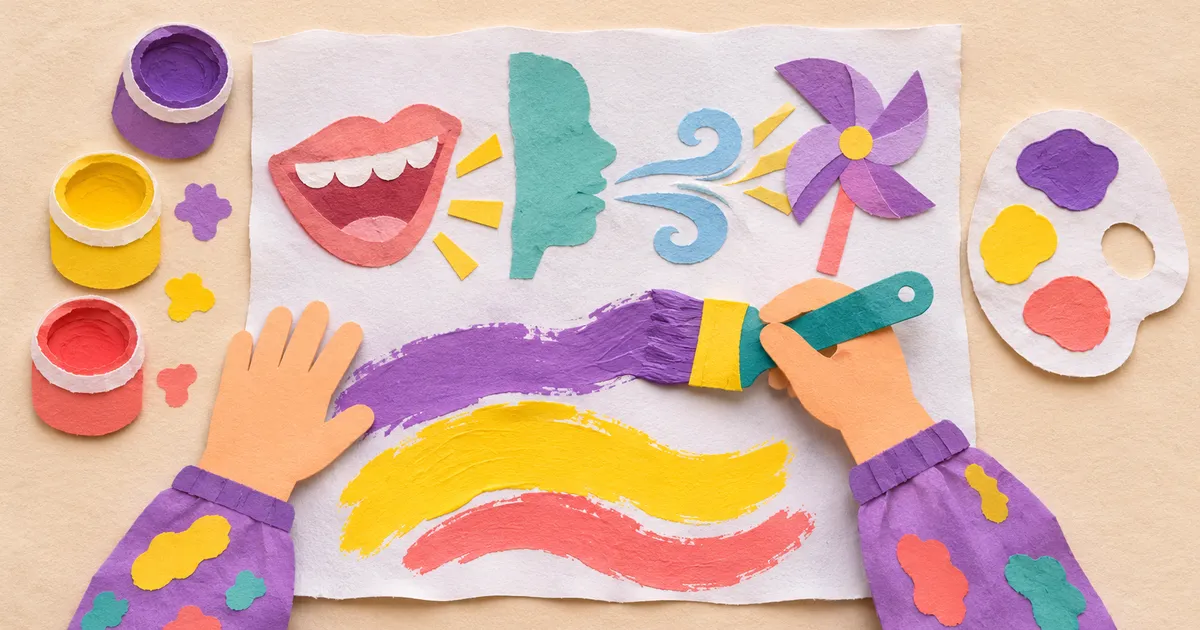
A voiceless sound forms when air passes through the mouth without vocal-fold vibration. This guide to voiceless sounds in english for kids helps families feel, hear, and practise the difference. Starter sounds include /p/, /t/, /k/, /f/, /th/ in “thin,” /s/, /sh/, /ch/, and /h/. Children can keep their natural accent. The goal is understandable speech: hear the contrast, shape the sound, and use it in familiar words and short sentences.
What Families Need to Know
Place two fingers gently on the throat. Say “ssss,” then “zzzz.” The mouth holds a similar position, but the throat buzzes for /z/ because the vocal folds vibrate. /s/ is voiceless; /z/ is voiced.
Learning voiceless sounds in english for kids differs from learning letters. The letter “c” represents /k/ in “cat” or /s/ in “city.” Two letters can form one sound, as in “ship,” “thin,” and “chair.” Start with sound and mouth position, then connect both to spelling.
British and American speakers share the same voiceless consonant groups, though /t/ varies. In American accents, the middle sound in “city” may resemble a quick /d/. In some British accents, /t/ becomes a brief throat catch. Both are natural accent patterns.
Feel the Difference Between Voice and Air
Try three checks. First, touch the throat for a buzz. Second, watch the lips and tongue in a mirror. Third, hold a small piece of paper a safe distance from the mouth and watch the airflow. Prioritise the throat check because voiced and voiceless sounds can both release air.
For /p/, close and release the lips. For /t/, place the tongue behind the top teeth. For /k/, lift the tongue’s back. Practising voiceless sounds in english for kids becomes simpler when your child names one action: “lips pop,” “tongue taps,” or “air slides.”
Model the sound once, invite a copy, then add a word. Move from /f/ to “fish,” then “a fast fish.” During LearnLink lessons, our experienced tutors model sounds through natural, age-appropriate exchanges.
A Practical Sound Map
Voiceless consonants often have a voiced partner with nearly the same mouth position. Pair comparison shows that throat vibration changes, not the strength or size of the mouth movement.
Do not cover the whole table in one sitting. Choose one pair your child hears but cannot yet pronounce accurately. Practise it at the start, middle, and end of words where possible: “pin,” “open,” and “cap.” Each position may need separate practice.
Examples and Goals by Age
For school-age kids, keep practice physical and brief. Choose visible sounds such as /p/ and /f/. Pop a pretend bubble for /p/, or move a feather with /f/. Say two or three words, then build a playful phrase. Formal sound symbols are unnecessary.
For school-age kids, connect sounds to spelling. Sort “ship,” “shop,” and “fish” under “sh,” then compare them with “vision.” Practise voiceless sounds in english for kids through short reading lines such as “Six fish splash.” Prioritise accuracy over speed.
For school-age kids, add self-checking. Your child can record one sentence, mark target sounds, and listen once for the chosen contrast. Older learners can compare accent models without ranking them. Ask whether listeners understand the sound.
Home Practice That Stays Manageable
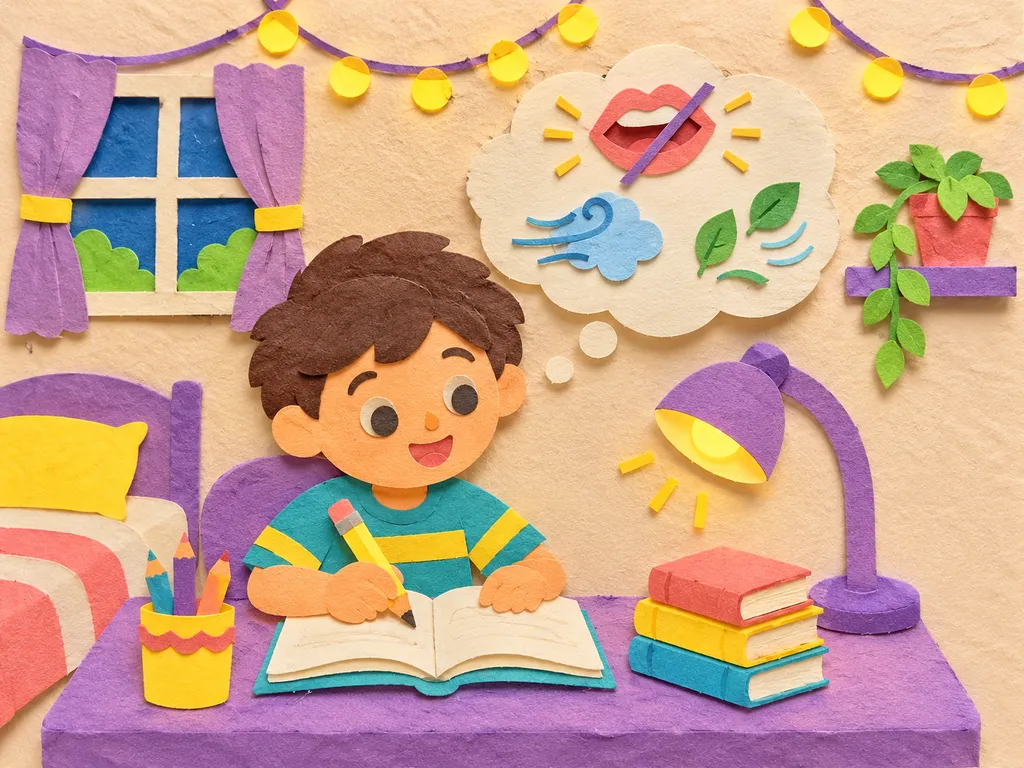
A five-minute routine supports one focused round: hear the pair, feel the throat, say three words, and finish with one sentence. Practice of voiceless sounds in english for kids should end while attention remains. Correct one target, not every sentence feature.
Exercise 1: Complete the Word
Choose the voiceless letter: _an, a cooling object (f/v); _at, an animal (k/g); coa_, something you wear (t/d); ri_e, a grain food (s/z). Answers: fan, cat, coat, rice. Say each answer while touching your throat.
If an answer sounds inaccurate, return to the isolated sound. Ask your child to hold /s/ for two seconds, shorten it, then add the rest of “rice.” This focuses practice on speech movement instead of spelling guesses.
Exercise 2: Find the Quiet Throat
Which word ends with a voiceless sound: leaf or leave, rice or rise, back or bag, coat or code? Answers: leaf, rice, back, and coat. Put two answers into one sentence: “Put the rice at the back.”
Save tongue twisters for later. Begin slowly with “Six fish splash” or “Cheap chips crunch.” Secure the target sound before increasing speed. If words blur, return to an ordinary sentence used during a meal, game, or lesson.
For a second reference on this topic, Wikipedia — English Phonology is most useful when it supports the specific rule, word, or resource discussed here.
Frequently Asked Questions
How Can I Tell Whether a Sound Is Voiceless?
Ask your child to rest two fingers gently on the throat and hold the sound. A voiced sound creates a buzz; a voiceless sound does not. Compare /s/ with /z/ or /f/ with /v/. When practising voiceless sounds in english for kids, check mouth position too. Missing vibration cannot correct misplaced lips or tongue.
Should My Child Use British or American Pronunciation?
Your child may follow either model or combine features heard at home, school, and online. British and American pronunciation share the voiceless consonants covered here. Explain noticeable differences, especially /t/ in “city” or “water.” The goal is effortless understanding, not copying a national accent or hiding a multilingual identity.
What If the Sound Does Not Exist in Our Home Language?
Your child may need extra time to hear the contrast and learn its mouth movement. Demonstrate the position in a mirror, compare one voiced and voiceless pair, and practise familiar words. For /th/ in “thin,” rest the tongue lightly between the teeth while air passes over it. Stop repetitions when speech becomes tiring or tense.
How Often Should Your Child Practise?
Practise briefly on most days when family life allows. Five calm minutes covers one sound pair, three words, and a sentence without creating a test. Review the same words across repeated sessions before adding new ones. If frustration starts, finish with a familiar word and revisit the difficult contrast another day.
Start your child's English journey today — book a trial lesson with LearnLink.
Stay updated on our latest tips and resources by following us on Instagram LearnLink.