Simple Machines Vocabulary in English for Kids
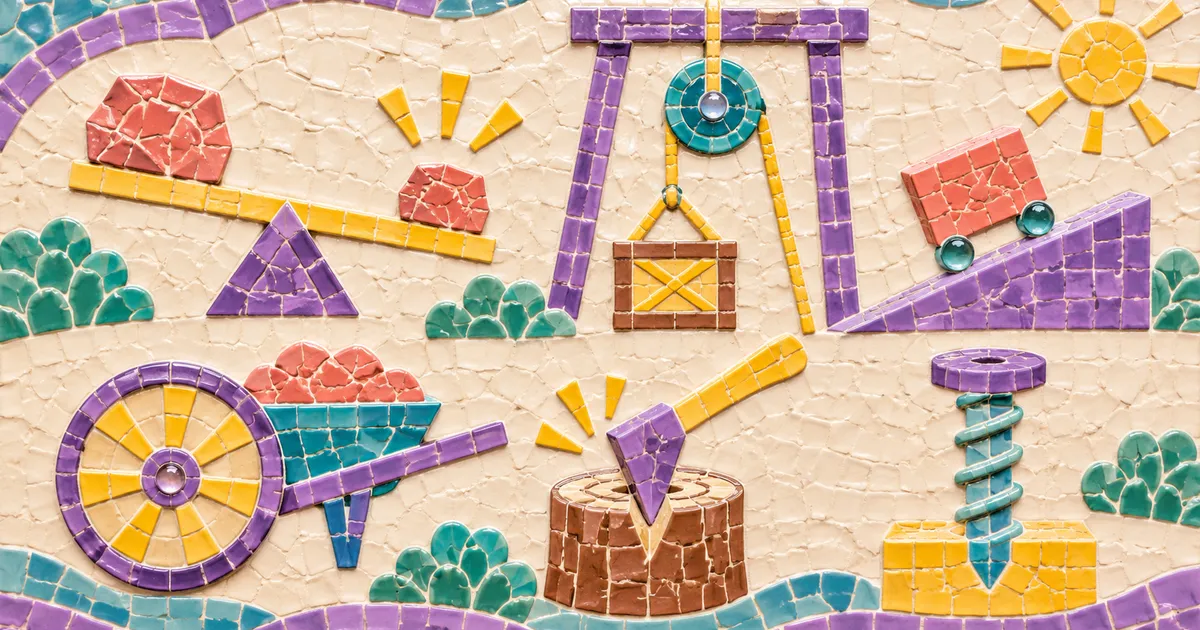
The six basic simple machines are the lever, wheel and axle, pulley, inclined plane, wedge, and screw. Children find them in toys, doors, playgrounds, and kitchens. This Simple Machines Vocabulary in English for Kids: Words and Activities guide teaches the six names, action verbs, and phrases describing how each machine works. Start with a real object, name its parts, and describe one action: “The wheel turns,” “The ramp slopes,” or “The lever lifts the load.”
Core Words and Phrases
In Simple Machines Vocabulary in English for Kids: Words and Activities, teach the six anchor terms before technical details. Let your child handle a safe object or study a picture while hearing each word. Connect each noun to an action.
- Lever: push down and lift up
- Wheel and axle: turn together and help something roll
- Pulley: pull a rope to move a load
- Inclined plane: move up or down a slope
- Wedge: push in, split, or hold apart
- Screw: twist, tighten, or loosen
Add force, effort, load, fulcrum, axle, rope, slope, and thread when your child is ready. Sentence frames include “The ___ helps us ___,” “We push the ___,” and “The ___ moves when we ___.”
How the Six Machines Differ
These machines make tasks easier by changing a force’s size or direction or spreading effort across a longer distance. The table connects each machine with an example and action phrase.
Some objects combine machine types. A toy car has wheels and axles; child-safe scissors combine levers and wedges. Ask your child to name visible parts instead of assigning the entire object to one category.
Examples in Everyday English
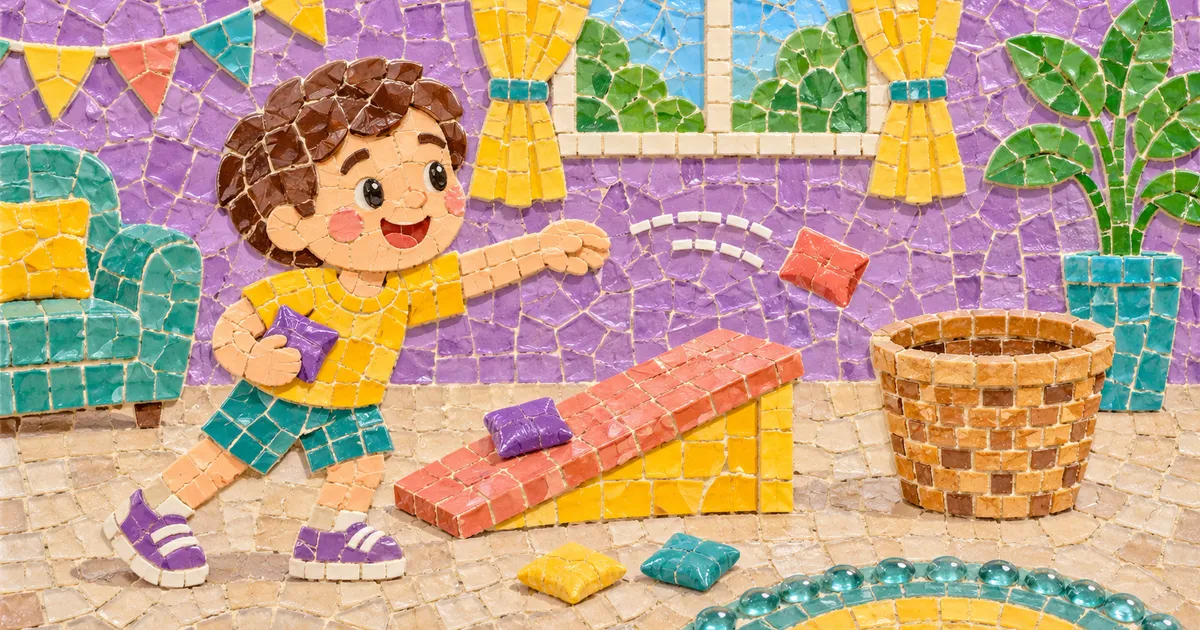
Use Simple Machines Vocabulary in English for Kids: Words and Activities in conversation, not only as a memorised list. Say, “The ramp is an inclined plane,” “The doorstop is a wedge,” or “The doorknob works like a wheel and axle.” Ask, “What moves?” and “Do we push, pull, turn, or lift it?”
If your child knows the object’s name in another language, accept the answer and add the English term: “Yes, that is the same object. In English, we call this part a pulley.” The child retains the science concept while learning a new label.
Finish the Sentence
Choose a safe object and complete three lines: “This is a ___.” “It helps us ___.” “We make it move by ___.” Award a point for each accurate noun, verb, and full sentence.
Activities for Different Ages
School-age kids: place a toy car, small ramp, doorstop, and easy-to-open jar on a mat. Name each object and let your child copy an action: roll, slide, push, or twist. Keep turns brief and repeat the words during later play.
School-age kids: organise a machine hunt at home, outdoors, or in class. Your child can draw six boxes and sketch one example in each. During LearnLink lessons, our tutors may ask, “Where is the fulcrum?” or “Which direction does the load move?”
School-age kids: compare two ways to move one object. Lift it directly, then move it along a sloping board. Request a short explanation using effort, distance, and force. Older learners can identify machine types within one compound device.
Keep it safe: use toys and blunt household objects. An adult should handle sharp wedges, heavy loads, tools, and high pulleys.
Practice That Builds Useful Vocabulary
To review Simple Machines Vocabulary in English for Kids: Words and Activities, alternate naming, sorting, and speaking. First, match objects to the six machine types. Next, hide the labels and retrieve each word. Later, explain how the objects work instead of repeating the matching task.
Correct errors calmly and precisely. If your child says “wheel” for a pulley, contrast the shapes and jobs: “Both are round. This wheel carries a rope, so it is part of a pulley.” Invite one corrected sentence.
Five-step practice check
- Choose three safe objects.
- Name each simple machine.
- Say one action verb for each object.
- Build one complete sentence per object.
- Review the same words two days later.
Correcting Common Mistakes
Children may call every device a “machine,” but the term describes a basic mechanism, not every object with moving parts. They may confuse a wheel with a pulley or learn ramp without inclined plane. Retain the familiar word, then add the science term: “Yes, it is a ramp. A ramp is an inclined plane.”
Check articles and plurals. We say a lever, a pulley, and a wedge, but an inclined plane. Plurals include levers, pulleys, wedges, screws, inclined planes, and wheels and axles.
Two corrections
Myth: Every simple machine has a motor.
Fact: A ramp, doorstop, or seesaw can work without a motor.
Myth: One object can belong to only one category.
Fact: A compound device can contain several simple machines working together.
- Sort six picture cards into lever, pulley, wheel-and-axle, inclined-plane, screw, and wedge groups.
- Ask your child to name each machine and explain what it does.
- Compare one lever and one pulley in a familiar picture book.
- Correct confusing words by matching each term to its picture twice.
- Build a four-column chart for names, pictures, actions, and everyday examples.
When a word has several meanings or pronunciations, Cambridge Dictionary is a useful check before turning it into child-friendly examples.
Frequently Asked Questions
What Are the Six Simple Machines Children Should Learn?
The six are the lever, wheel and axle, pulley, inclined plane, wedge, and screw. A Simple Machines Vocabulary in English for Kids: Words and Activities lesson should include push, pull, lift, turn, roll, and slide. These verbs explain what each machine does.
At What Age Can a Child Learn Simple-machine Vocabulary?
Children from about age four can start with real objects and short action phrases. Younger learners may say “The wheel rolls.” Older learners can explain the fulcrum, axle, load, or force direction. Match the language to your child’s English and science knowledge instead of rushing through every term.
Should We Teach the Science Idea or the English Word First?
Start with the object and action, then add the English label. Let your child roll a wheel, slide an object down a ramp, or twist a lid before requesting a definition. Then build a sentence: “The inclined plane helps the load move between two heights.”
How Can We Practise Without Worksheets or Screens?
Walk around your home, school area, playground, or neighbourhood. Look for ramps, doorstops, wheels, handles, and safe pulley systems. Your child can point, name, sketch, or sort each example. Finish by explaining one object’s movement with a noun, action verb, and full sentence.
Start your child's English journey today — book a trial lesson with LearnLink.
Stay updated on our latest tips and resources by following us on Instagram LearnLink.